

Ballard's FCmove®-XD powers Finland’s Escalate hydrogen-electric truck pilot, advancing zero-emission long-haul transport in challenging winter conditions

Share on

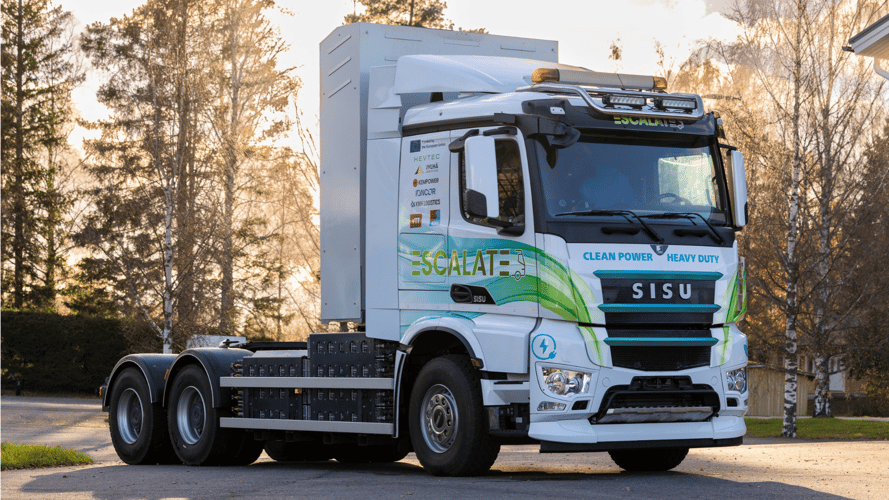
Escalate, the European Union (EU)-funded project piloting hydrogen to power heavy-duty transport on long-haul journeys in the most challenging climate conditions, has begun in Finland, powered by Ballard fuel cells. The pilot aims to develop technology for zero-emission trucks that enhances operational capacity, safety performance, and environmental impact – and contributes to the EU’s ultimate objective of emission-free heavy road freight transport.
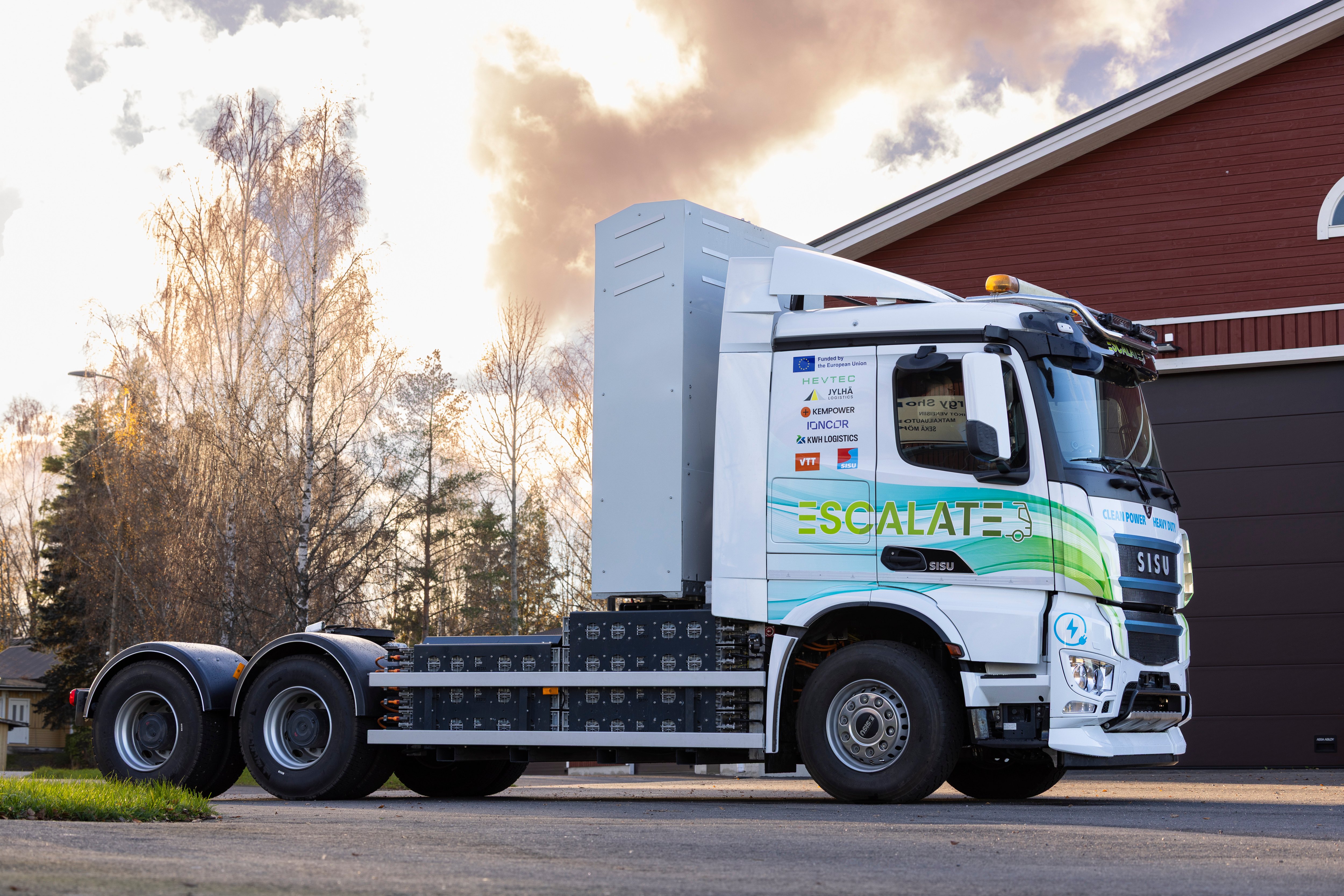
Led by the VTT Technical Research Centre of Finland, the program has introduced a high-tech hybrid truck combining electric mobility with hydrogen fuel cells. The SISU Escalate vehicle runs primarily on electricity, with Ballard’s FCmove®-XD 120kW fuel cell engine serving as an alternative power source for quick charging on long-haul assignments. Following successful testing, the truck will start normal transport operation by the end of 2026, with its vehicle data continuously monitored and measured for performance.
The hydrogen fuel cell vehicle integrates a truck and trailer built on the robust SISU platform, designed specifically for heavy-duty applications. The articulated unit will collect data on efficiency, safety, and performance in real-world conditions, including demanding winter environments – looking to demonstrate the vehicle’s ability to operate safely and efficiently across diverse and harsh conditions, including freezing temperatures and steep gradients.
 “We will collect data on the technology, energy consumption, and overall functionality and reliability of different solutions. The vehicle will drive 540km per day, during which we will monitor how much electricity and hydrogen it is using. By monitoring the truck for six months, we will gain data about the vehicle’s performance, the ways different factors such as weather conditions impact consumption, and what limitations may occur in the operation of the vehicle. This information will help us develop the charging station network and optimize energy consumption."
Mikko Pihlatie
Research Professor, VTT
Initially tested on a basic route at the Port of Kokkola in March 2026, trials of SISU’s capabilities continued on a regional course at the Port of Helsinki later in the year. Now the project advances to the 500km+ long-distance return trip from Vuosaari harbour in southern Finland to the city of Jyväskylä in central Finland, and the vehicle will also take on regional distribution assignments in the Helsinki metropolitan area.
The data collected will allow the pilot team to calculate the most economic ways of driving this type of hybrid vehicle. Price data on hydrogen fuel and charging will enable the team to estimate how much energy should be loaded and where, and the data is benchmarked against diesel-powered vehicles to assess cost benefits.
Additionally, ensuring seamless integration with existing logistics infrastructure is critical. SISU Escalate will utilize Finland’s first hydrogen fuel station built in Jyväskylä. There are also charging stations at both ends of the long-haul route, and a megawatt scale charging station will be built along it.
While the SISU Escalate truck will not officially be launched in the market, the results from extensive trials will be invaluable to ascertain the long-term viability of hydrogen technology for heavy-duty trucks - with learnings from the pilot informing the best solutions for a product series developed for the market.
The final data will also help develop energy management systems and optimize driving with the battery to maximize the distance that can be driven with electricity.