#PoweredByBallard
GeoPura: Grid constraints and connection delays - how hydrogen is supporting electrification
How hydrogen is helping with the challenge in easing demand for electricity


Equinix has tested hydrogen power at its Dublin facility, exploring zero-emission backup for cooling and critical systems amid grid constraints in Ireland


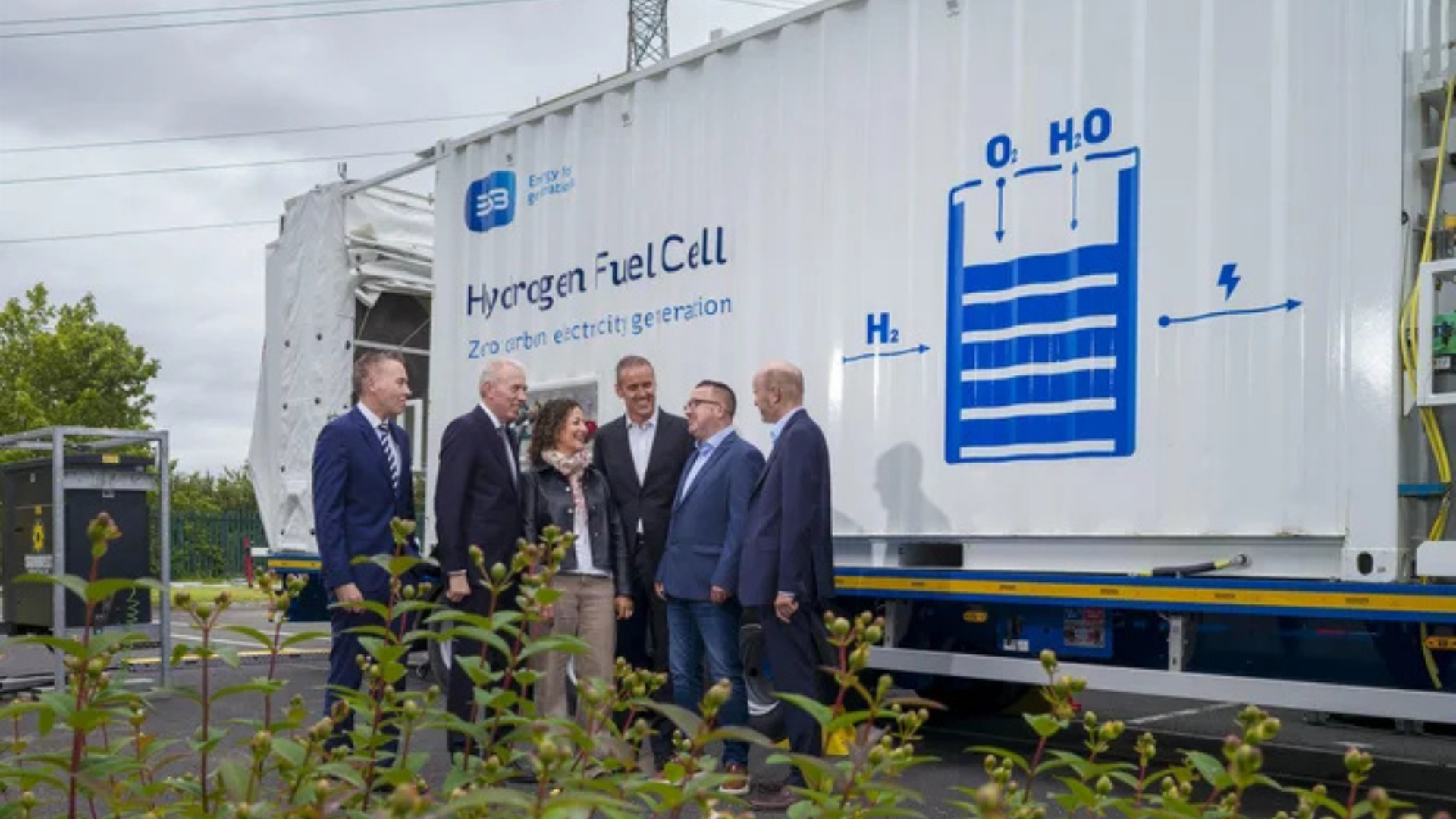
Equinix, Inc. has trialled its first deployment of a GeoPura Hydrogen Power Unit (HPU), powered by Ballard fuel cell technology, for data center critical back-up systems in Ireland. The trial installation is in collaboration with the Irish Electricity Supply Board (ESB) and marks a significant step in the exploration of hydrogen as a back-up power resource for large energy users (LEUs), which could potentially replace diesel and gas generators in future.
Equinix’s trial comes at a critical time for Ireland’s economy as ongoing grid capacity constraints in parts of the Dublin metropolitan area continue to challenge digital infrastructure growth. The trial represents a first for Equinix in Ireland, with no other data center currently operating hydrogen power at this scale in a critical live environment. It is also a first of its kind for Equinix’s 280+ data center footprint worldwide.
Find out how Equinix is driving data center sustainability below:
[Footage courtesy of Equinix]
As part of a 12-week pilot, two hydrogen-powered generators – developed by GeoPura and one of which is owned by ESB – have been installed on-site at Equinix’s DB3 data center in Blanchardstown, Dublin. Housed in shipping container-sized units, the generators are currently being used to support cooling systems within Equinix’s DB3 facility and have helped Equinix to bring its power use effectiveness (PUE) in that data centre to below 1.3*.
GeoPura is supplying Equinix with hydrogen from renewable sources for the project. The two units, running in parallel, are designed to provide a zero direct on-site emissions alternative to traditional diesel or gas generators, which helps to reduce operational emissions at the point of use. Powered by green hydrogen and using advanced proton exchange membrane (PEM) fuel cell technology, the system produces clean, silent energy. Through uninterruptible power supply (UPS), the HPUs can respond in real time to changes in grid capacity and ‘switch on’ when needed, providing up to half a megawatt of continuous power.
“This is a landmark research project that could be part of the solution to Ireland’s grid constraints and the challenge of accessing clean energy. Ireland is already making serious moves on hydrogen and how it can be stored at scale here. What we're doing with ESB is a different piece of the same puzzle: proving that hydrogen can work as a practical, zero direct on-site emissions alternative to diesel and gas in a live environment. If this pilot delivers what we expect, it adds real momentum to Ireland’s decarbonization story.”

Peter Lantry
Managing Director, Equinix Ireland
Equinix and ESB will gain valuable data insights into carbon reduction potential, along with operational, safety, commercial, and grid peak-shaving potential, which could be used by policymakers and universities to assess the best deployment solutions for Ireland.
Utilizing green hydrogen supplied by GeoPura, the units store and transport energy for use wherever and whenever it is needed. This enables grid-constrained sites, such as data centers, to operate with a reliable, critical back-up solution that produces zero direct on-site emissions form the electricity it produces. Hydrogen fuel units such as these are scalable up to 50MW to support both backup and prime power applications. The hydrogen fuel cell system produces only water and heat as byproducts at the point of use.
“As demand for digital infrastructure continues to grow, operators are facing increasing pressure to secure reliable power, reduce emissions, and minimize the impact on local communities. This trial shows how hydrogen can help address those challenges today. By combining hydrogen fuel cell technology with battery systems and uninterruptible power capabilities, we’re delivering reliable zero direct on-site-emission power that can respond instantly when required. Working alongside Equinix and ESB, this project is demonstrating that hydrogen can support both backup and prime power applications in a live data center environment, showing how hydrogen can strengthen energy resilience, reduce reliance on fossil fuels, and support the continued growth of critical digital infrastructure.”

Andrew Cunningham
CEO, GeoPura
The waste heat could potentially be used to support future district heating projects and the water can be recycled into the on-site cooling systems to offset mains water use and help improve operational efficiency.
*The global industry average, according to the Uptime Intelligence Global Data Center Survey 2025, is 1.54 and the best possible score is 1.
How hydrogen is helping with the challenge in easing demand for electricity
Vertiv and Ballard have entered into a strategic technology partnership focused on back-up power applications for data centers and critical...
Ballard is providing its fuel cell technology and expertise to support Universal Hydrogen’s efforts to transition commercial airports to...