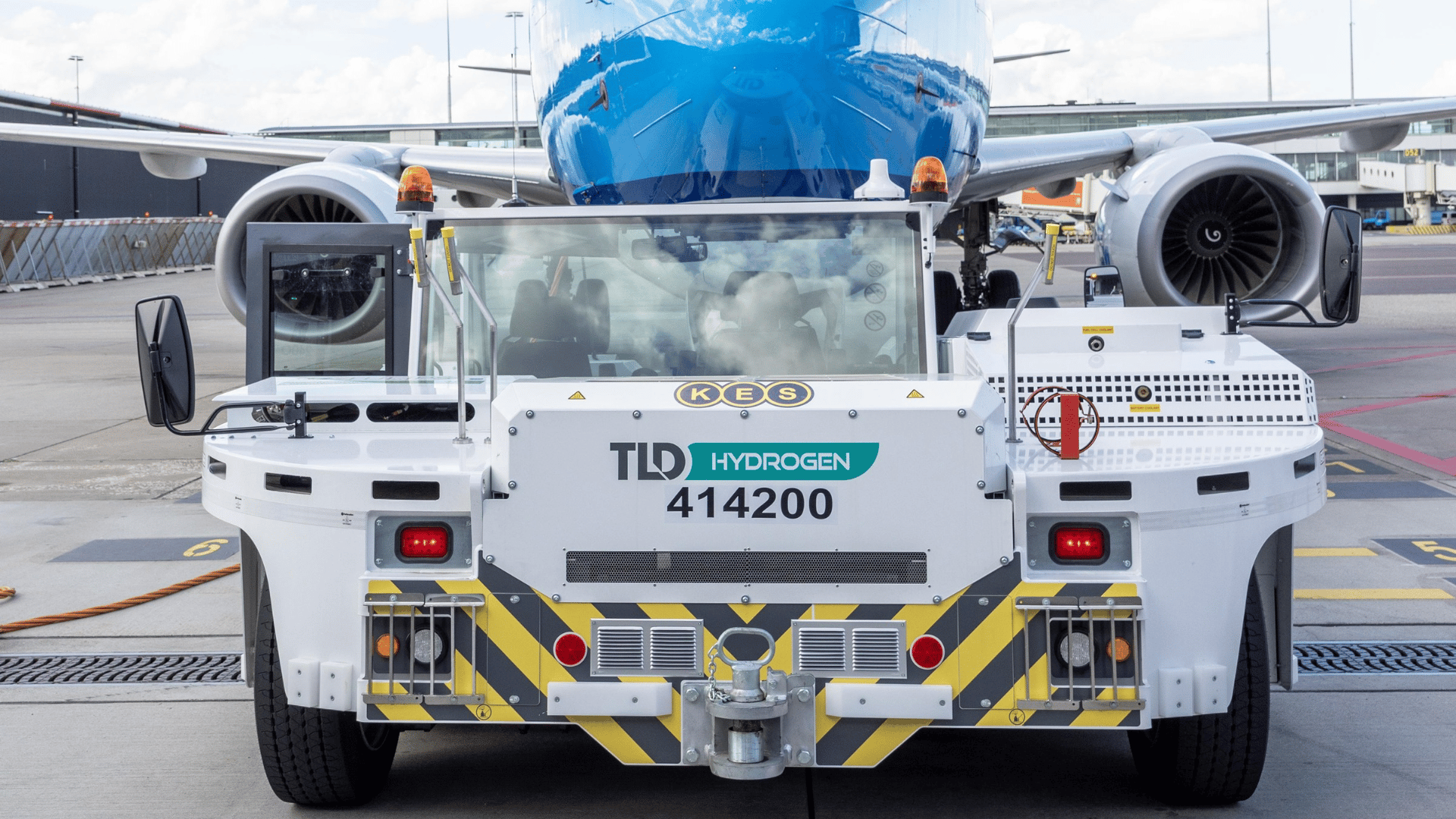
Leading ground support equipment (GSE) supplier, TLD's hydrogen-powered aircraft tow tractor, integrating Ballard fuel cell technology, has successfully completed trials at Amsterdam's Schiphol Airport, demonstrating that cleaner technologies can meet the operational demands of a major airport while reducing environmental impact.
Developed through the EU-funded TULIPS project, the demonstration is providing valuable insights into the performance and future potential of hydrogen-powered airport operations.
Launched in 2022 and coordinated by the Royal Schiphol Group, TULIPS brings together 32 European partners to develop and demonstrate sustainable airport technologies. A central focus of the program is to explore how hydrogen fuel cells can complement battery-electric solutions in energy-intensive ground handling applications.
From development to real-world operations
Airports are increasingly exploring alternatives to diesel-powered equipment as they work to reduce emissions without compromising operational efficiency. Aircraft tow tractors present a particular challenge, requiring significant power, extended operating periods and reliable availability to maintain demanding flight schedules.
In 2024, TLD joined the consortium to develop a hydrogen-electric aircraft tow tractor, working in collaboration with Ballard. Built on TLD's existing 17-ton TPX-200-MTX-e platform, the vehicle integrates Ballard's FCmove®-HD+ fuel cell engine. Ballard's advanced module offers a compact, durable, and robust solution for zero-emission heavy-duty mobility, providing 100kW of clean power, ensuring high performance and reliability even in extreme conditions.
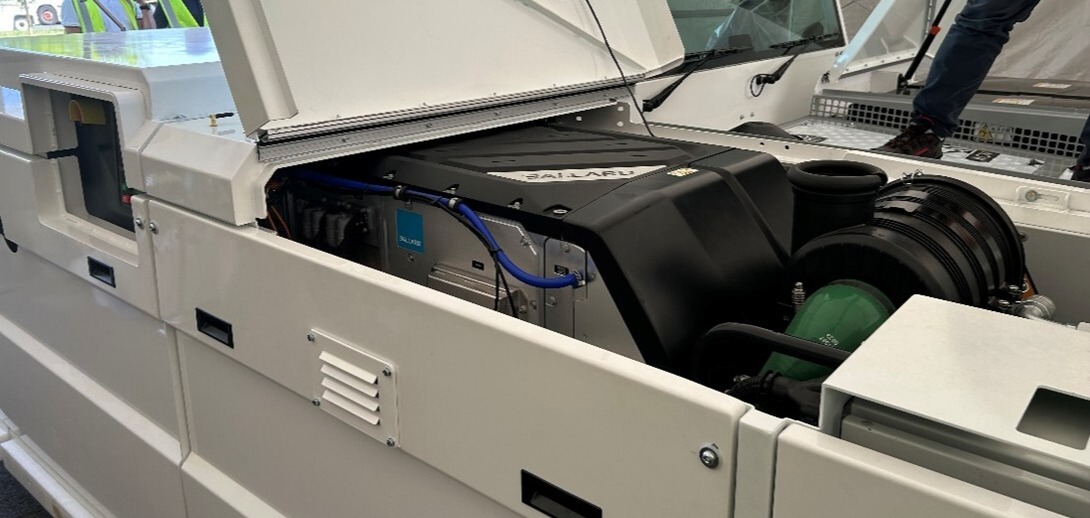 Ballard's FCmove®-HD+ fuel cell engine integrated in the TLD zero-emission tow tractor
Following engineering development, system integration, and safety validation, the tractor reached a major milestone in September 2025 when it entered operational trials at Schiphol, performing aircraft movements for major airline, KLM.
Demonstrating performance and operational flexibility
As airports pursue ambitious decarbonization targets, hydrogen fuel cells offer a complementary technology to battery electrification, helping address applications where extended duty cycles and rapid refueling are priorities. The TULIPS program has highlighted the potential of this technology to meet demanding ground handling requirements.
The fuel cell tow tractor offers key benefits over battery-electric rigs, including faster refueling times and greater range and availability, ensuring the vehicle is ready on demand without long charging downtime. Bringing hydrogen technology into an active airport environment, operations have involved TLD’s tractor successfully moving Boeing 737 aircraft between parking areas, gates, hangars, and taxiways. Performing several aircraft pushbacks daily, the zero-emission unit offers a operational range of 130km when driving unladen and can tow wide-body aircraft, including the Boeing 737, for distances of up to 25km.
These capabilities demonstrate the potential to extend operating periods and reduce interruptions for energy replenishment compared with conventional battery-electric equipment. The hybrid drivetrain also enables the fuel cell to provide sustained electrical power while the battery supports peak power demands during acceleration and heavy towing.
Importantly, the vehicle produces zero CO₂ emissions at the point of use, offering a pathway to reducing diesel consumption and improving local air quality around airport operations - a critical performance outcome for the TULIPS consortium.
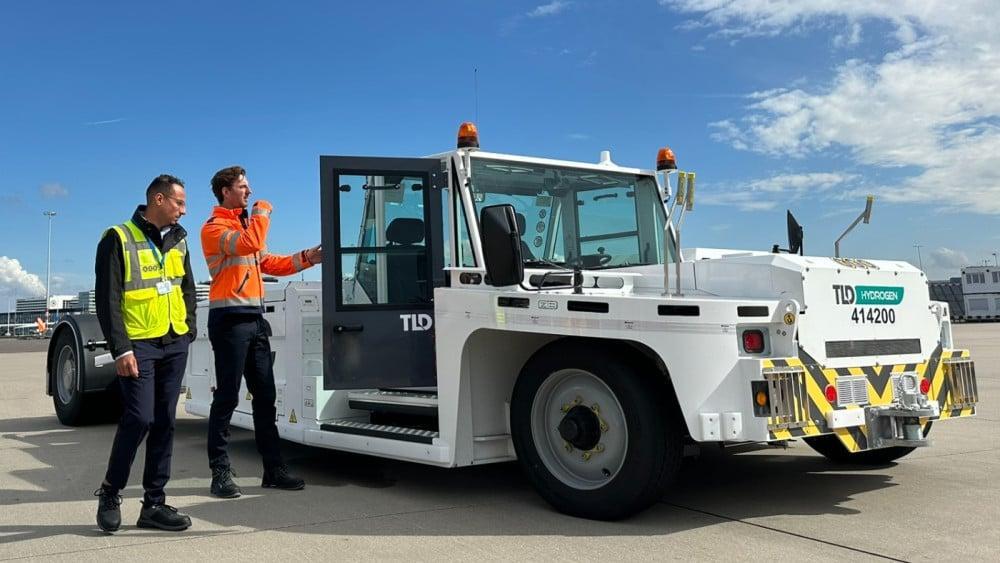 The TLD tow tractor has been in operational testing at Schiphol Airport since September 2025
Lessons for future deployment
TULIPS has provided important practical experience in introducing hydrogen technology into operational airport environments. The demonstration required close coordination between manufacturers, airport authorities, infrastructure providers, and ground handling operators to address hydrogen supply, refuelling infrastructure, safety certification, and staff training.
As well as recording positive and reliable vehicle performance, operator feedback has been encouraging, with drivers describing the tractor as smooth and responsive.
However, the project has also highlighted remaining challenges, with affordable hydrogen supply, infrastructure investment, regulatory harmonization, and total cost of ownership arising as the decisive factors in determining the commercial viability of hydrogen-powered GSE at scale.
Building momentum for hydrogen-powered airports
The project's findings are now contributing to wider industry knowledge-sharing. In November 2026, Schiphol presented the TULIPS sustainability roadmap to Airports Council International Europe, sharing lessons from 17 demonstrations to help other airports identify practical decarbonisation opportunities.
Looking ahead, TLD has outlined plans to continue testing hydrogen fuel cell technology in heavy-duty tow tractors, including further trials at European airports.
For Ballard, the project reinforces the potential of fuel cells beyond traditional road transport applications, particularly in demanding industrial environments where power, availability, and operational flexibility are essential.