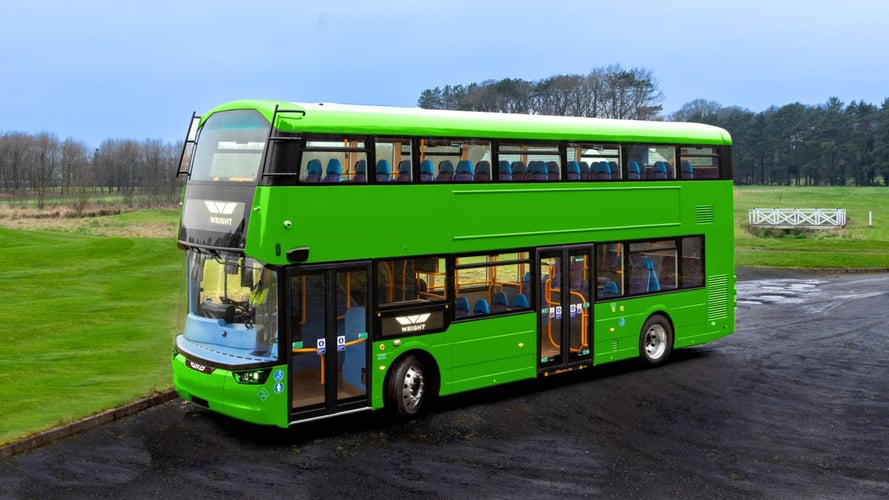
Ballard Power Systems has announced that Wrightbus, a leading UK‑based bus manufacturer and long‑standing Ballard partner, has formally nominated Ballard as the fuel cell supplier for its next‑generation StreetDeck Hydroliner Gen 3.0 hydrogen bus platform.
This nomination covers the integration of Ballard’s FCmove®‑SC hydrogen fuel cell engine -Ballard’s newest, high‑efficiency platform launched in late 2025 - into Wrightbus’ Gen 3.0 double‑decker FCEV bus, with series production scheduled to begin in 2027.
The FCmove®‑SC engine delivers higher efficiency, extended durability, and a simplified system architecture designed to reduce total cost of ownership (TCO) for transit operators. These improvements are particularly impactful for long‑range, high‑utilization duty cycles where hydrogen fuel cell buses offer operational advantages over battery‑electric alternatives.
Building on Ballard’s market-leading FCmove® family, the FCmove®-SC delivers greater sustained power and improved in-service performance, targeting a peak power capability of at least 75kW, optimized for consistent in-service output and higher thermal margins for improved efficiency.
The fuel cell engine is a compact, efficient, hydrogen-powered module optimized for public transit, and designed to improve power density, simplify vehicle integration, and reduce lifecycle cost.
Today, Ballard‑powered fleets have grown to more than 2,200 fuel cell buses worldwide, collectively logging over 300 million kilometers with 98% availability and zero reported safety incidents.
Through Ballard Fleet Services, including training, technical support, parts supply, operational monitoring, digital insights, and ongoing stack servicing, Ballard and its customers unlock additional value that strengthens fleet performance and supports long‑term operational success.



.png?width=400&height=400&name=Oben%20Uluc%20400x400%20(1).png)