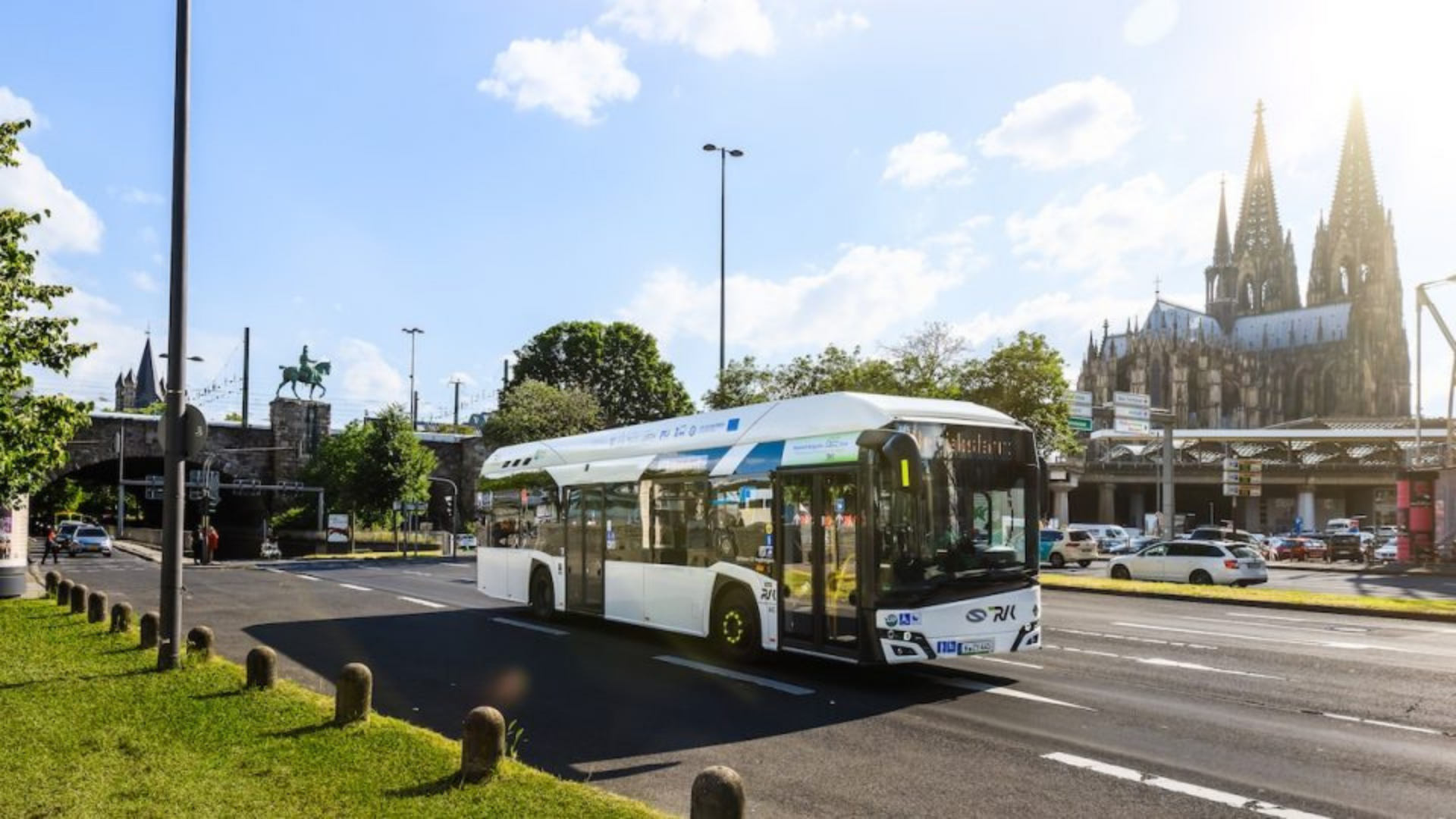
As the German Federal Ministry for Digital and Transport (BMDV) has awarded €417 million to fund zero-emission buses - a total that includes significant hydrogen deployments of 175 new fuel cell buses - Ballard's Oben Uluc, Vice President, sales & marketing, outlines the progress in technology and operation being made by fuel cell-powered fleets and the specific benefits to German operators.
Germany has made significant progress in electrifying its public bus networks, but the toughest routes – long distances, hilly terrain, challenging weather conditions, and limited depot power – remain testing for battery-electric buses. As a robust alternative that is ready to tackle these challenges, fuel cell buses are proving to be a reliable, zero-emission solution for these demanding applications. With a further €500 million funding directive scheduled for Spring 2026, Germany offers the critical financial support for transport operators to scale hydrogen fleets and meet the nation’s 2030 climate targets.
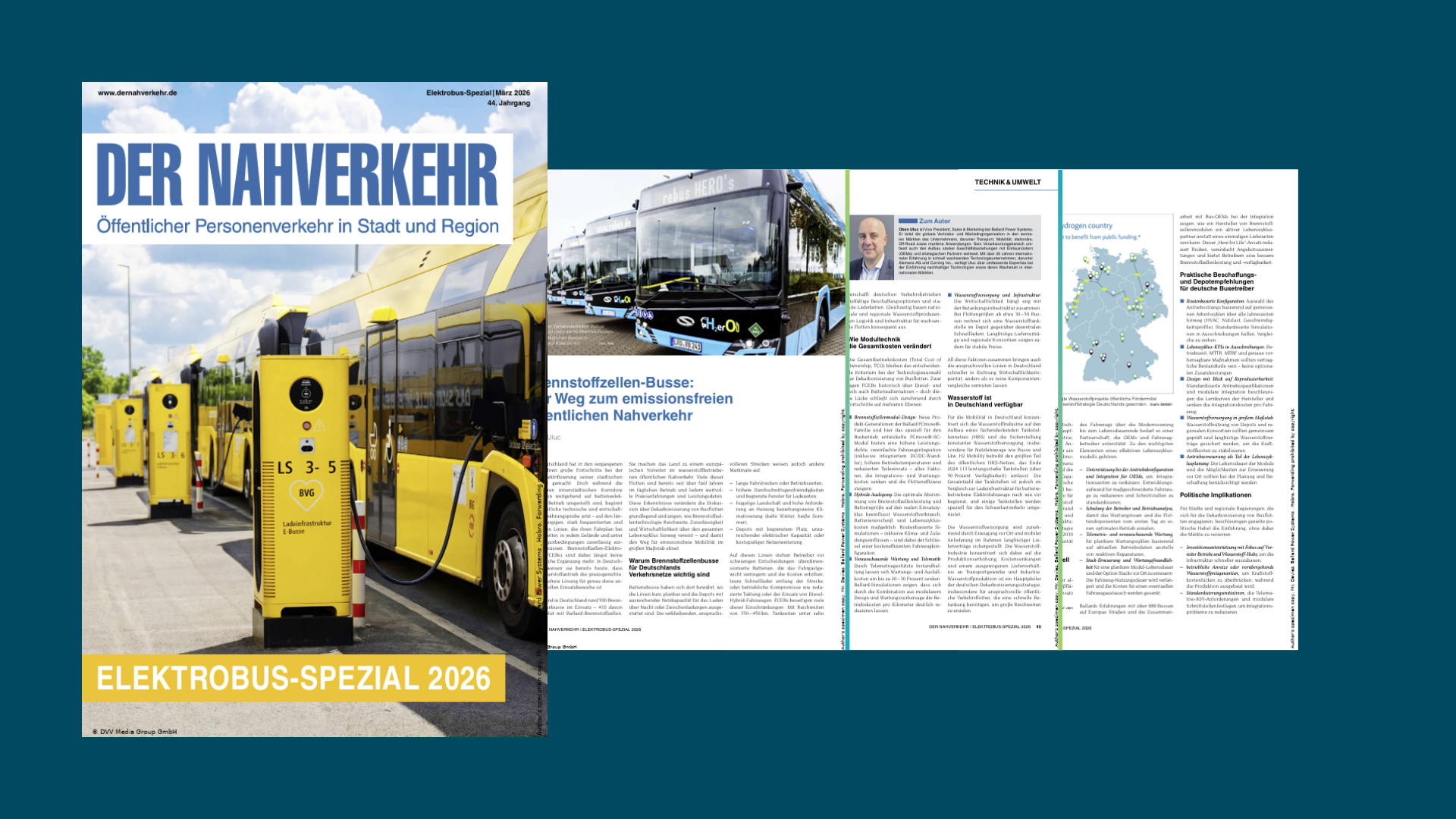
In the March 2026 issue of German industry publication Der Nahverkehr, Uluc explores how strategic collaboration between zero-emission technologies can optimize the country’s entire bus network for the long term.
Read the full article in German here.
Germany now operates approximately 500 hydrogen buses, including 410 powered by Ballard fuel cells - many of which have been in daily service for more than five years. Fuel cell buses offer long range (350-450 km), fast refueling, high availability, and consistent performance year-round, making them especially suitable for difficult routes. Operators report strong performance data, efficient hydrogen consumption, and simplified depot logistics compared to battery buses.
Technological advancements – such as Ballard’s latest FCmove® modules, optimized hybrid configurations, predictive maintenance, and cost-effective depot hydrogen infrastructure – are helping to reduce total cost of ownership and accelerating large-scale, commercially viable deployment.
At the same time, Germany is expanding hydrogen production, supply chains, and refueling stations as part of its national hydrogen strategy. Successful adoption requires lifecycle partnerships between OEMs, operators, and technology providers, alongside clear procurement guidelines, standardized simulations, and strategic hydrogen sourcing. Policymakers can further support scale-up through targeted investment and temporary fuel incentives.
The challenge for Germany in decarbonization is not whether fuel cell buses work – practical experience shows that they do – but how quickly public transport can replace diesel vehicles on all routes without disrupting bus operations.
The answer is pragmatic: Battery-electric buses should be deployed where they have proven operationally and economically viable (on short inner-city routes), and fuel cell buses where range, refueling speed, and year-round reliability are paramount.
If bus fleets are planned using route simulations, lifecycle engineering, telemetry-based maintenance, and strategic hydrogen procurement, they offer solid and scalable potential for zero-emission bus operation on Germany's most demanding corridors.



.png?width=400&height=400&name=Oben%20Uluc%20400x400%20(1).png)