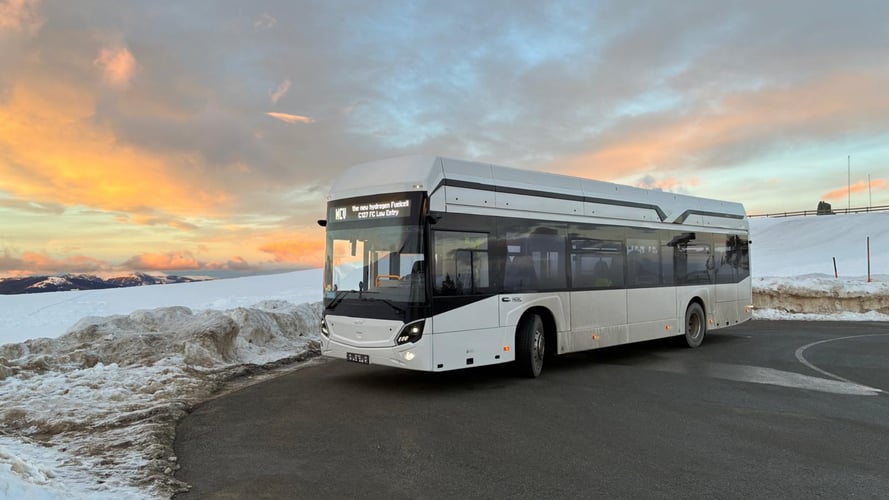
Amid steep alpine gradients and chilly mountain temperatures, Egyptian manufacturer MCV’s C127 new fuel cell intercity bus – powered by Ballard – has successfully completed rigorous performance testing in Tirol, Austria. As a central component of the H2Alpin research project, the challenging trials evaluated the performance of the heavy-duty hydrogen-powered bus under the demanding topographical and climatic conditions of high-altitude environments.
Navigating a demanding route, the C127 began testing in Kematen and passed through Praxmar, before scaling an altitude of more than 2,000 meters up to Kühtai. The journey included steep 15% gradients and operation in freezing temperatures, a challenge that MCV’s zero-emission bus successfully mastered. The positive trail demonstrated the maturity of hydrogen fuel cell technology and its ability to excel in a wide range of challenging and adverse conditions.
Confidently handling even the steepest sections of road around Kühtai with no effect on range, the vehicle’s performance provided a compelling blueprint for zero-emission mobility in alpine regions. The trials demonstrated that fuel cell technology can be as adept at negotiating high mountain terrain as the flat urban streets of Europe’s cities.
Led by operator Standortagentur Tirol, the H2Alpin project used the flagship test to reinforce hydrogen’s credentials as a viable zero-emission alternative to diesel for regional alpine bus lines. It also highlighted fuel cells as a practical solution compared with battery electric buses that can struggle with range and reliability due to the extreme energy demands of sustained Alps climbs.
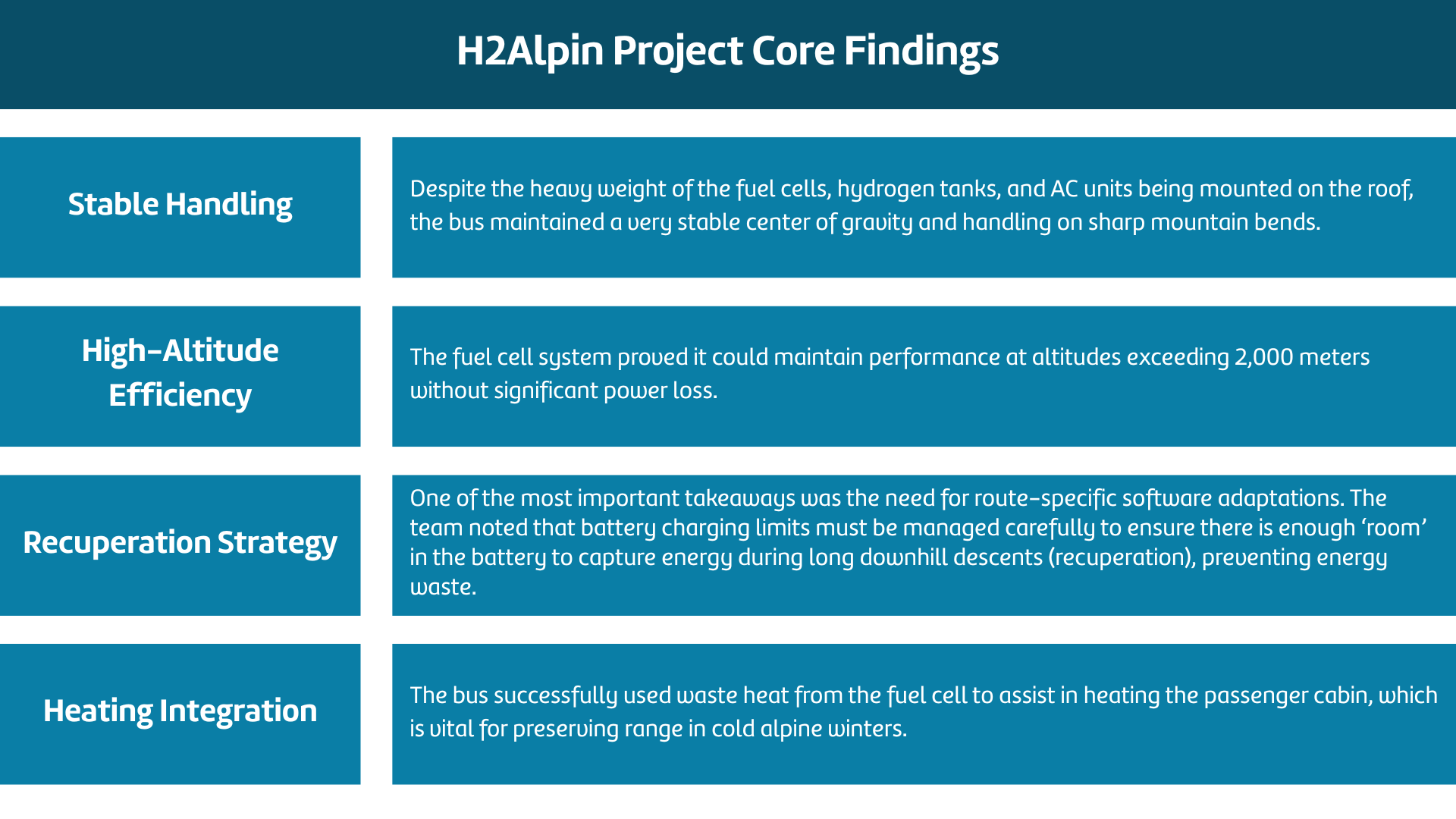
MCV’s 12-meter intercity application integrates Ballard’s FCmove®-HD+ 100kW fuel cell engine, a 100kW battery and a powerful electric drivetrain with a peak output of 410kW (300kW continuous power). The FCmove®-HD+ is a durable, compact, and easy to install solution for system integrators and vehicle OEMs. The module offers high performance and efficiency on demanding routes and can deliver freeze-start capability from -25°C with no plug-in required or need for special start procedures in alpine climates.
The FCmove®-HD+’s high temperature operation also permits a smaller cooling package for integration flexibility and generates HVAC heating –significantly improving overall vehicle fuel economy.
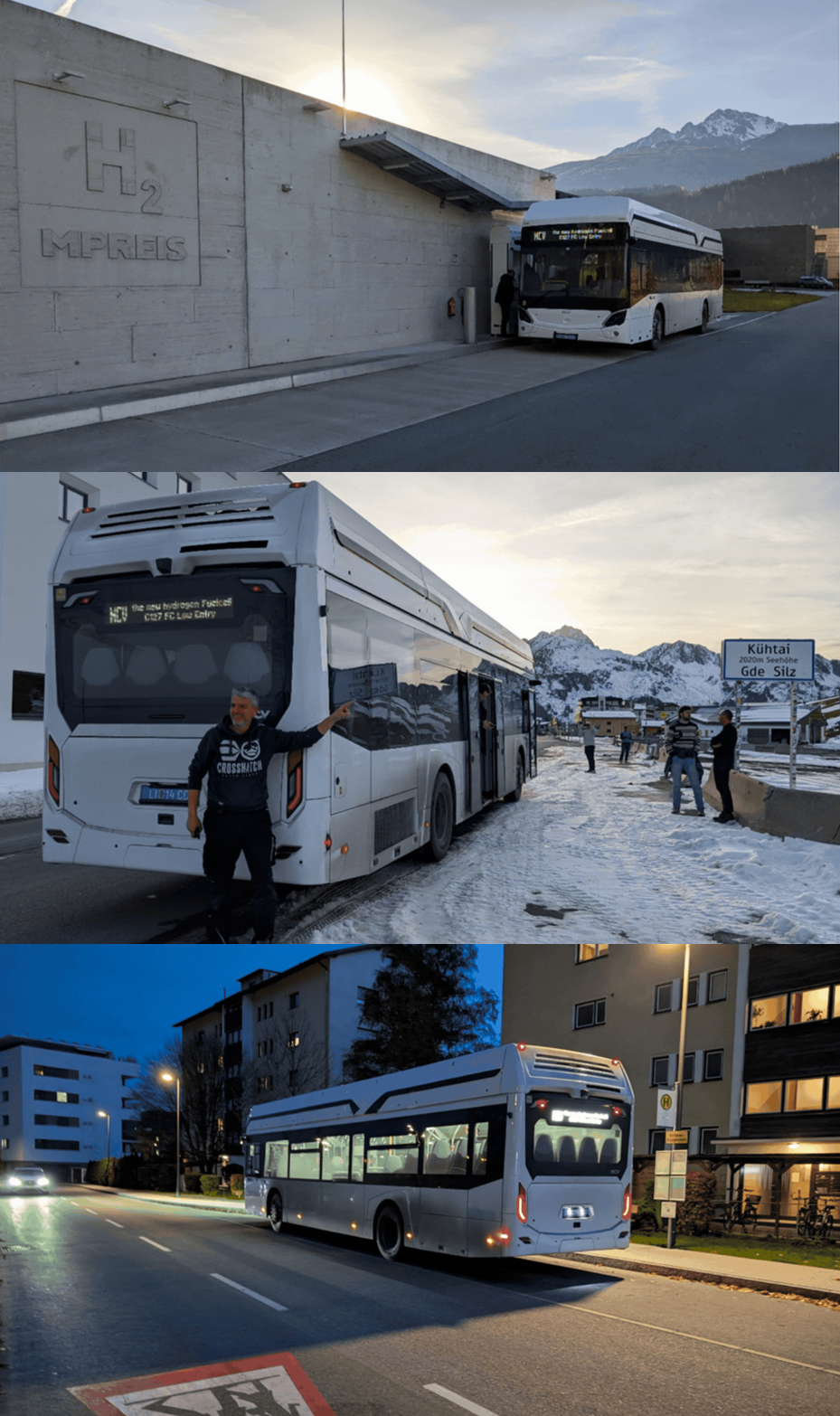
Following the test drive in Kühtai, MCV also spent a week trialling the fuel cell bus' performance and operation on an official ÖBB line in Villach.
Delivering positive results across the 98km route, the operator was particularly impressed by the driveline acceleration and the low hydrogen consumption recorded during the Ballard-powered trial, which was consistent at around 7kg/100km.
The bus' average speed charted around 43km/h on a test drive where the maximum height reached on the route was 1,731m above sea level - while the encouraging performance was delivered in conditions that never rose above freezing and dipped as low as -5°C.