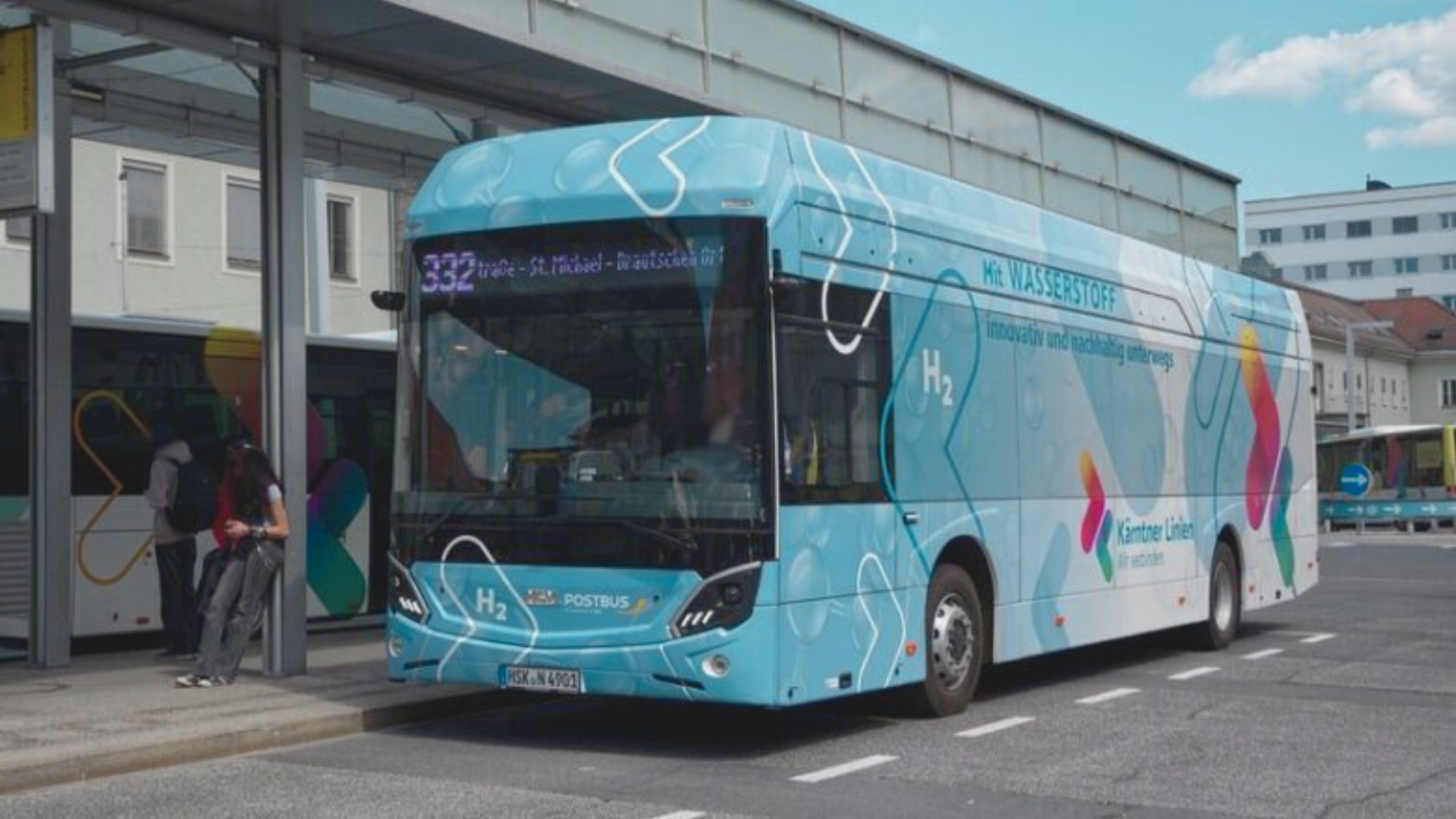
The latest major hydrogen bus deployment in Europe sees transit operator ÖBB Postbus roll out 35 hydrogen-powered C127 FC units supplied by Egyptian manufacturer MCV on the roads of Carinthia, Austria. The program has a staggered integration plan that commenced in June 2026 and will introduce the fuel cell fleet gradually through the rest of the year.
Powered by Ballard, the first batch of zero-emission vehicles is now in regular service in the country’s southern Villach region, with additional introductions on regional and intercity routes across several areas including Drautal, Rosental, and Gegendtal planned over the coming months.
The initiative combines this exciting deployment program of fuel cell buses with the development and installation of dedicated hydrogen refuelling infrastructure which will support the entire hydrogen-powered fleet for regional public transport operations.
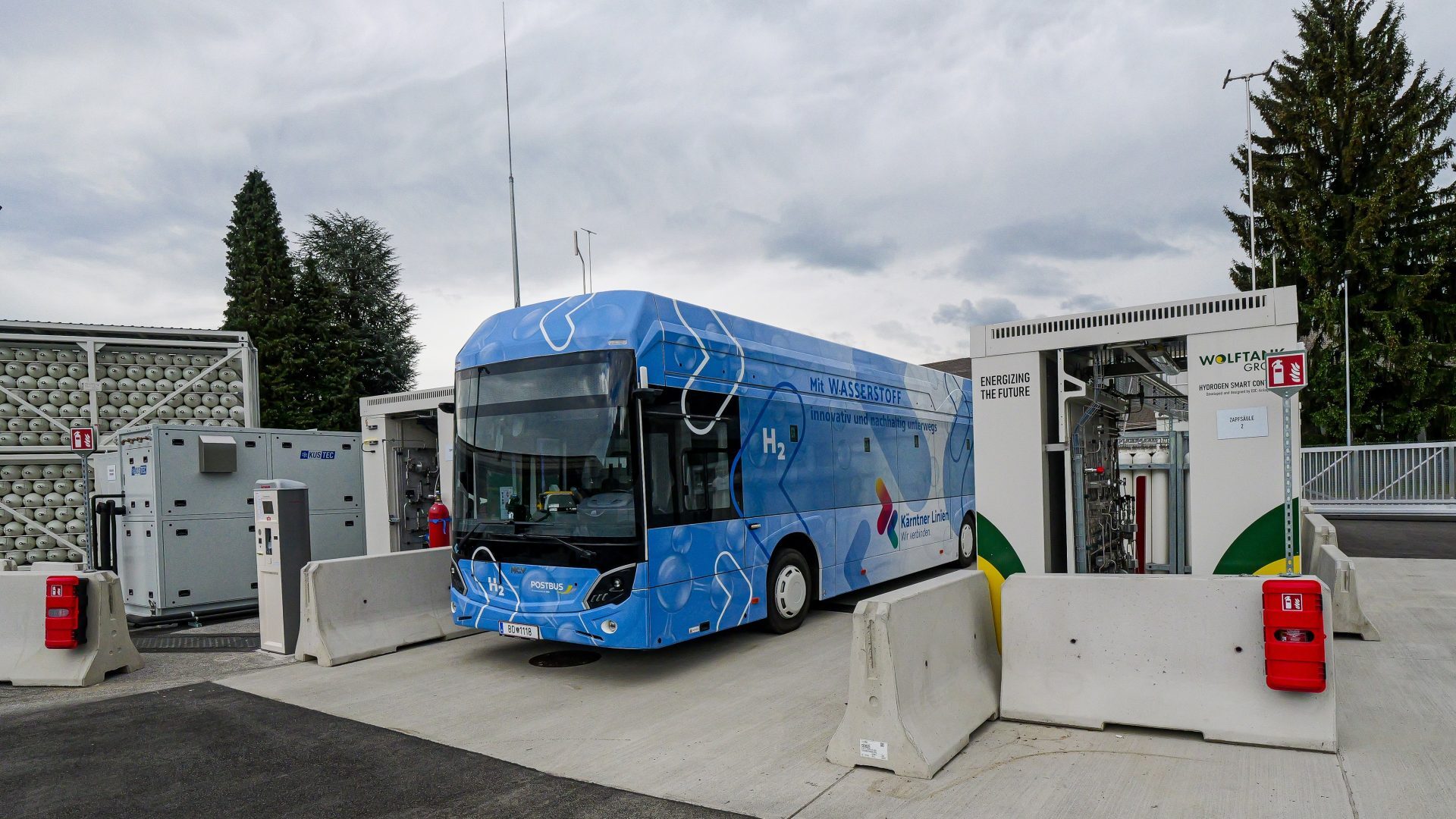 MCVs C127 FC at the newly-built hydrogen refueling station in Arnoldstein [Image courtesy of Sustainable Bus]
The 12-meter C127 FC was first unveiled at Busworld Europe in Brussels, Belgium in October 2025 and has a total operating range of 400km with capacity for nearly 80 passengers. Following its premiere, MCV’s low-entry hydrogen bus went on to complete rigorous alpine testing in Tirol, Austria in February as part of the H2Alpin research project – proving its suitability for the terrain, temperatures, and gradients that the mountainous areas of central Europe can present.
Prior to deployment, MCV also spent a week trialling the fuel cell bus' performance and operation on an official ÖBB line in Villach. Delivering positive results across the 98km route, the operator was particularly impressed by the driveline acceleration and the low hydrogen consumption recorded during the tests, which was consistent at around 7kg/100km.
The bus' average speed charted around 43km/h on a test drive where the maximum altitude reached on the route was 1,731m above sea level - while the encouraging performance was delivered in conditions that never rose above freezing and dipped as low as -5°C.
The trials demonstrated that fuel cell technology can be as adept at negotiating high mountain terrain as the flat urban streets of Europe’s cities.
[Source: Fuel Cells Works]
MCV’s intercity application integrates Ballard’s FCmove®-HD+ 100kW fuel cell engine, a 100kW battery and a powerful electric drivetrain with a peak output of 410kW (300kW continuous power). The FCmove®-HD+ is a durable, compact, and easy to install solution for system integrators and vehicle OEMs. The module offers high performance and efficiency on demanding routes and can deliver freeze-start capability from -25°C with no plug-in required or need for special start procedures in alpine climates.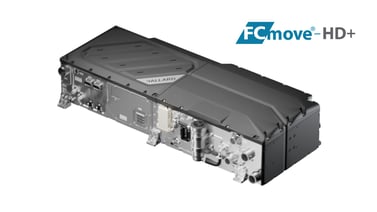
The FCmove®-HD+’s high temperature operation also permits a smaller cooling package for integration flexibility and generates HVAC heating – significantly improving overall vehicle fuel economy.
The rollout is part of the “DeCarB – Decarbonizing Carinthian Bus Transport” initiative promoted by the State of Carinthia and implemented together with a consortium including the Carinthian Transport Association, Gutmann, Kelag and ÖBB Postbus.
MCV has confirmed that the configuration has been developed for operating conditions where charging infrastructure deployment may be difficult or where long operating ranges and short downtimes are required.