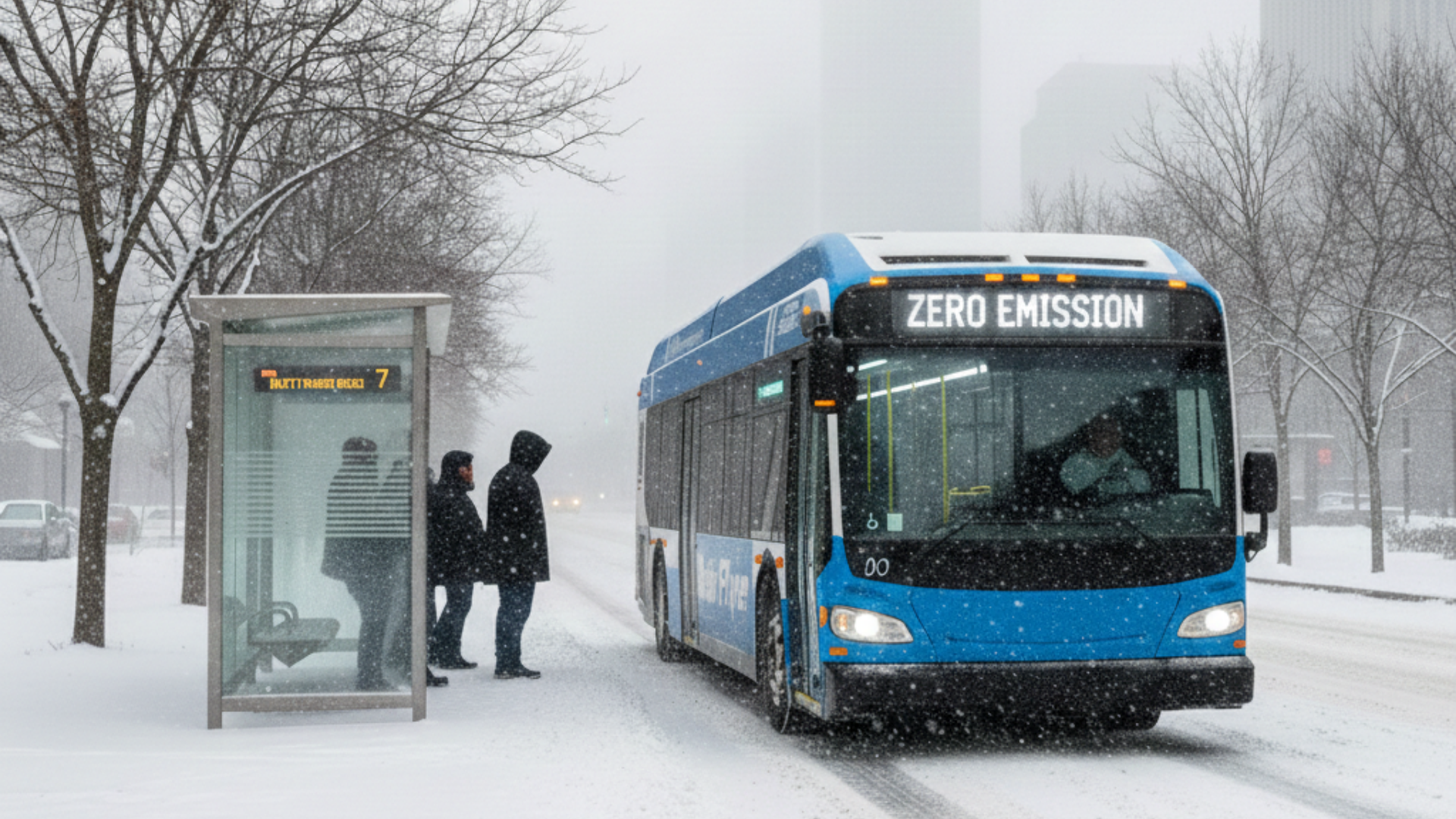
Navigating difficult terrains and coping in freezing temperatures - successfully operating in cold weather can be a significant challenge for transit buses. But fuel cell technology is proving its strength and durability in these adverse conditions, with fleets powered by Ballard delivering substantial and important advantages when temperatures drop below zero.
In the winter months, fuel cell buses are demonstrating consistent performance, strong reliability, fast refueling, and range retention - and are outperforming battery electric buses in many cold-weather duty cycles. Hydrogen-powered buses are also not intrinsically degraded by low ambient temperatures, and fuel cell systems generate usable waste heat that can be recovered for cabin and battery thermal management, reducing the impact on vehicle range.
These advantages in performance present significant benefits to global transit agencies who regularly experience challenges when relying on legacy and alternatively-powered buses, meaning they can now stay on schedule, maintain performance, and keep passengers warm and comfortable while utilizing a zero-emission public transit solution.
Real-world deployments are increasing at an encouraging rate, as operators in North America and Europe experience the difference hydrogen adoption can make in challenging climates and routes. Larger fuel cell bus fleets are now in regular service in regions with extremely harsh winters and continue to show reliable service and range in freezing conditions without significant performance loss. Below, we take a look at some of the latest cold-weather fleets powered by Ballard.
Bolzano, Italy
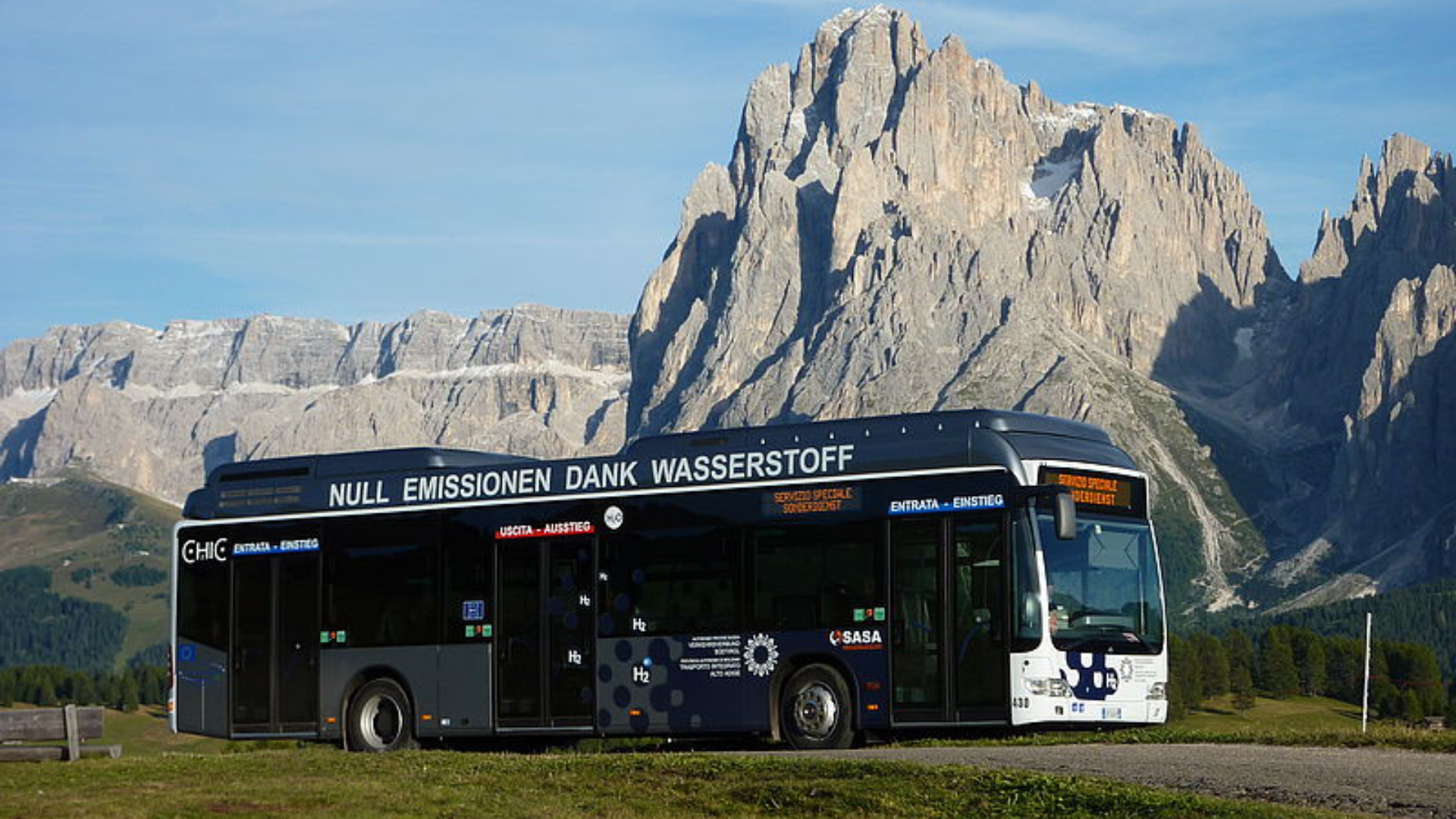
Bolzano is home to one of Europe’s longest-running hydrogen projects. Powered by Ballard, the 12-unit fleet operates in the heart of the Dolomites, where challenging terrains and plunging temperatures are daily considerations for the fuel cell buses.
Every year, the region experiences an “Alpine Winter", which combines rapidly fluctuating temperatures between the valley and mountain passes that boast very steep gradients - up to 23% in some nearby test areas. Heavy-duty power is required for the climbs, while extreme cold tests the system's start-up capabilities.
Combating these requirements, Ballard’s FCmove® engines are designed to operate at altitudes up to 1,500m (and tested up to 1,865m) without significant efficiency losses. This is a critical differentiator from other zero-emission technologies that struggle with power delivery on long inclines in cold weather.
Some Ballard-powered buses in this region have surpassed 35,000 hours of revenue service - the equivalent of driving 14 hours a day for over eight years - demonstrating consistent performance in the cold and rugged terrain.
Edmonton, Alberta
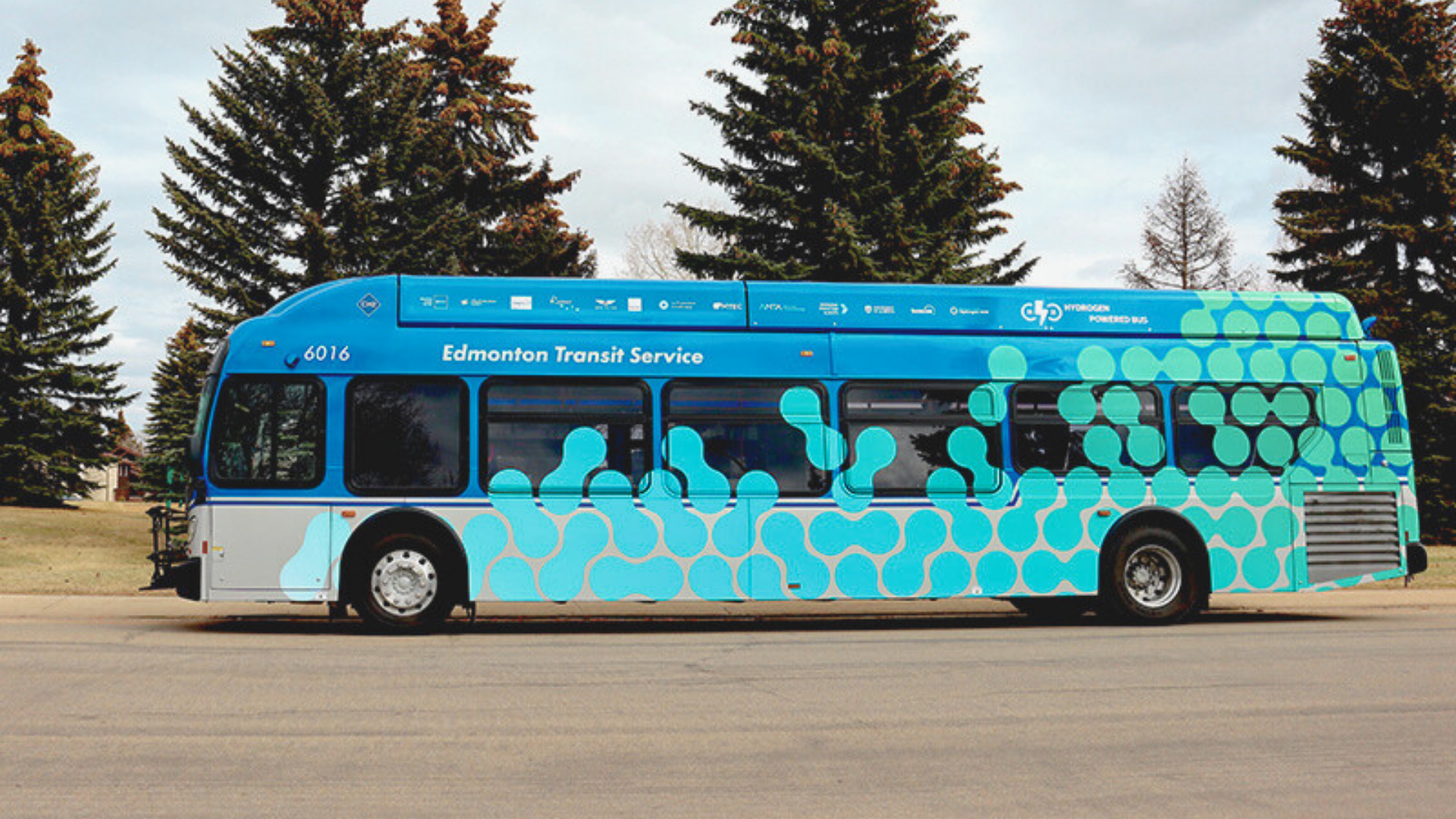
Edmonton is a global benchmark for winter transit. Operating as part of the Alberta Zero Emission Hydrogen Transit initiative, the Edmonton Transit Service uses Ballard-powered New Flyer buses, demonstrating that zero-emission mobility still performs in some of the coldest urban temperatures in the Northern Hemisphere.
Winter in the Canadian Prairies means "polar vortex" events where temperatures plunge to -40°C for extended periods. For transit, the challenge is two-fold: maintaining mechanical reliability in "brittle-cold" conditions and meeting the large auxiliary heating load required to keep passengers safe and comfortable in a 40-foot cabin.
While battery electric buses in the same fleet can experience a 35–40% reduction in range during Edmonton winters due to the energy-intensive HVAC requirements, Ballard-powered buses maintain their full operational profile – 480km (300 mile) range – regardless of heater setting, allowing it to stay on its 1-to-1 diesel replacement schedule.
Rostock, Germany
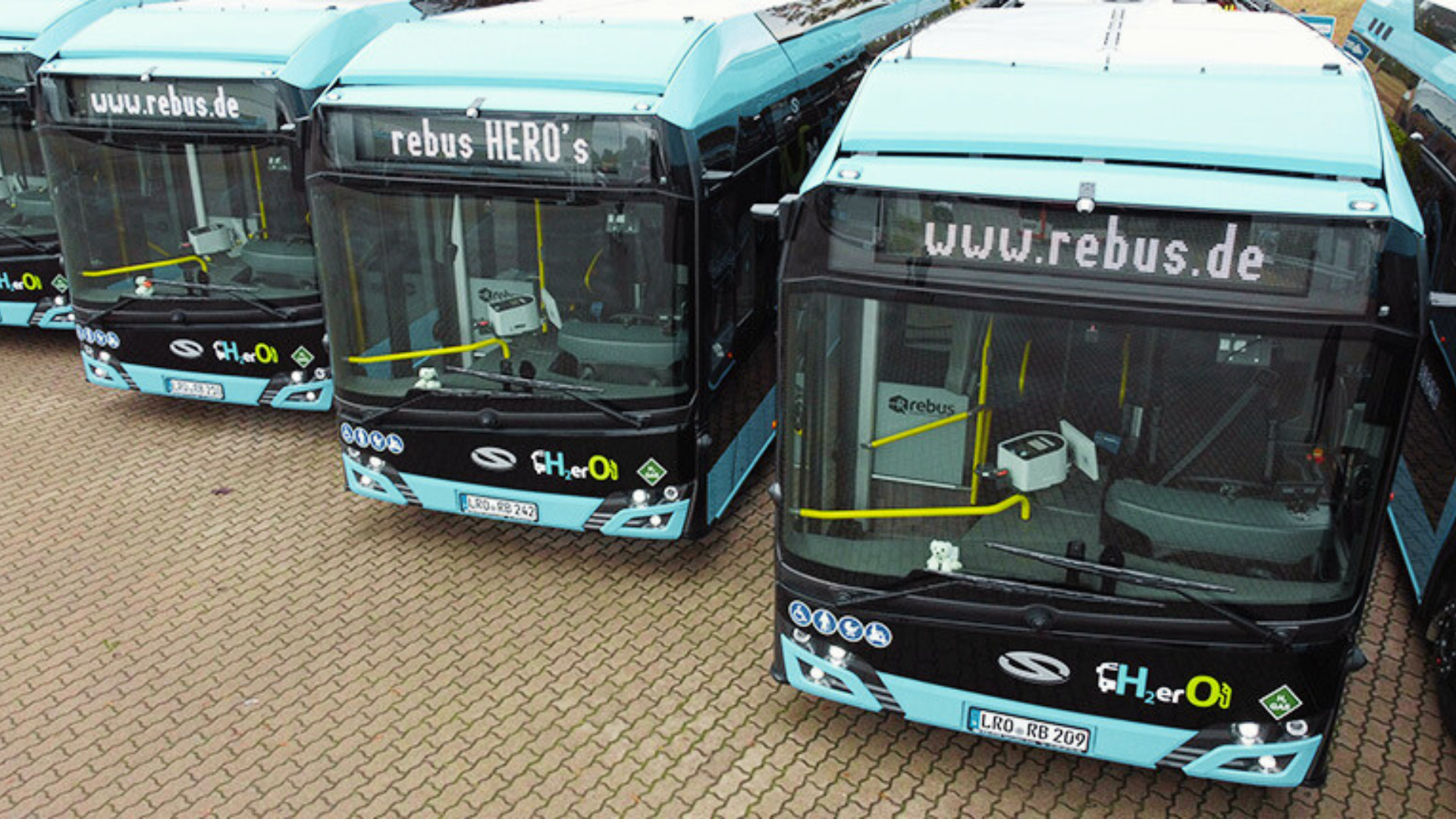
Rostock is the site of one of Germany's largest hydrogen bus deployments. Operating under the "H2erO Klimahelden" (Climate Heroes) initiative. Transit authority Rebus Regionalbus Rostock utilizes a fleet of 52 Ballard-powered Solaris buses to service a wide-ranging regional network that connects city centers with rural districts.
Unlike a contained city loop, regional routes in the Rostock district cover roughly nine million kilometers annually. The fleet faces the "Baltic Winter" conditions - damp, biting cold with high winds that increase the "chill factor" on the bus exterior.
For a regional operator, the challenge is to maintain a high-frequency schedule across long distances (up to 500km per tank) without the luxury of frequent mid-day charging stops. Therefore, Rebus selected Ballard’s FCmove®-HD (70kW) and HD+ (100kW) modules specifically to match the range requirements of their 82 regional lines - with the ability to successfully and regularly service long-distance commuter routes between Güstrow and Bad Doberan.
Rostock’s success is built on a "depot-first" model that avoids the need for a big overhaul of the city's power grid, with two high-capacity refueling hubs supplied with 100% green, locally-produced hydrogen from Rostock-Laage.
Winnipeg, Manitoba
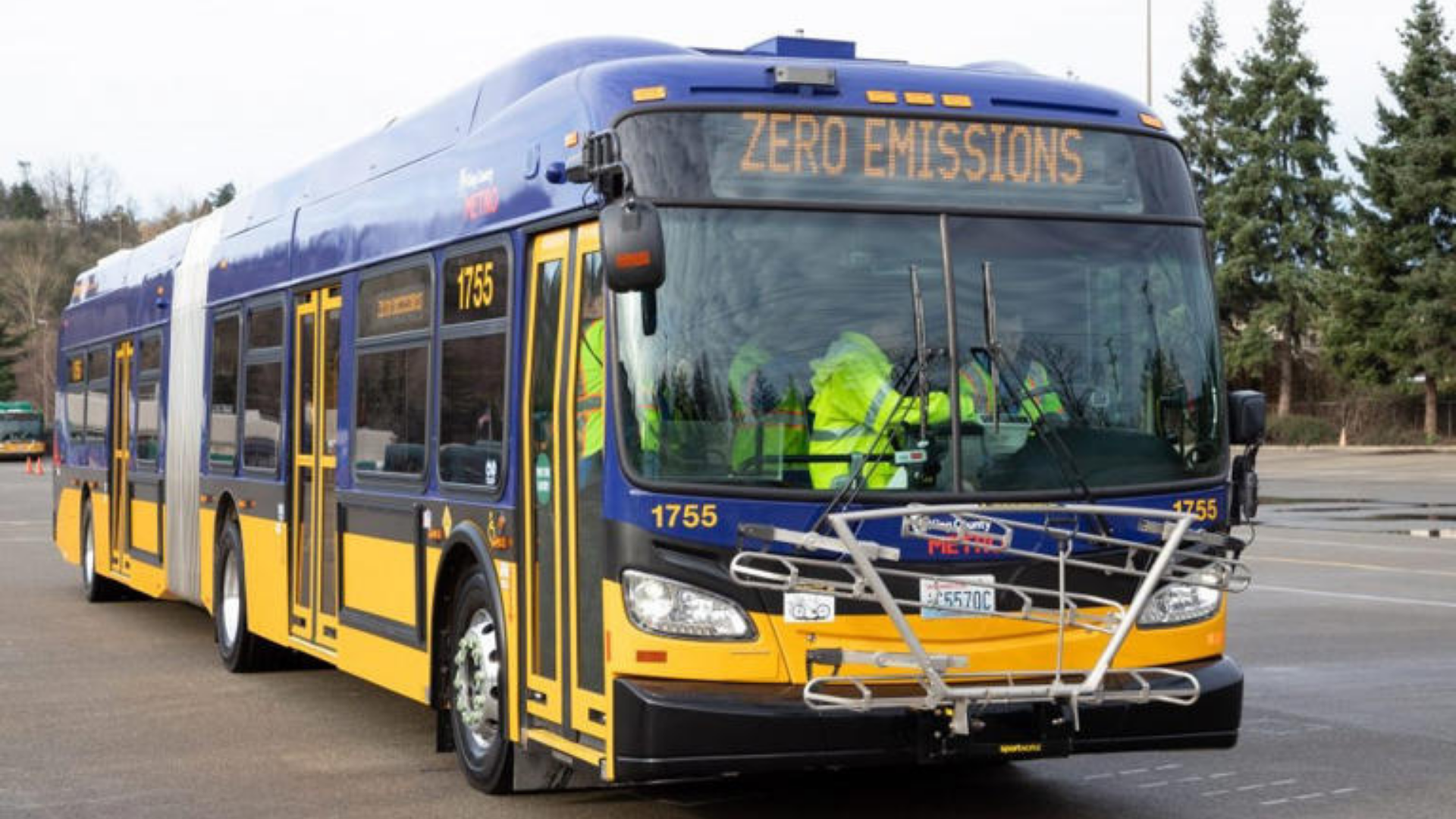
Winnipeg has made transit history as the first Canadian city to put 60-foot articulated zero-emission buses into service. Using Ballard FCmove®-HD+ modules, Winnipeg Transit is testing the limits of hydrogen endurance in a climate where -30°C is a standard winter baseline.
Heating a 60-foot articulated bus in a Manitoba winter is an immense energy drain. Because of the "articulation joint", heat loss is significantly higher than in a standard bus. Winnipeg Transit found that heating these large cabins in winter can drastically shorten the runtime of battery-only buses, potentially requiring mid-day recharging.
The Ballard modules provide waste heat recovery to warm the large cabin area and keep the batteries at optimal temperatures, ensuring that passenger comfort doesn't come at the cost of the route.
In official reports and press releases from last year, Winnipeg Transit has been remarkably clear about the "Endurance Gap" discovered during their Transition to Zero-Emission Bus Program. It confirmed FCEBs have the capability to drive for up to 24 hours on a single fill - compared to battery electric buses which are typically limited to 10-15 hours of driving before requiring a multi-hour charge.
For Winnipeg, hydrogen is the only zero-emission technology that allows for "continuous service"—crucial for 24-hour transit hubs and late-night winter reliability.